
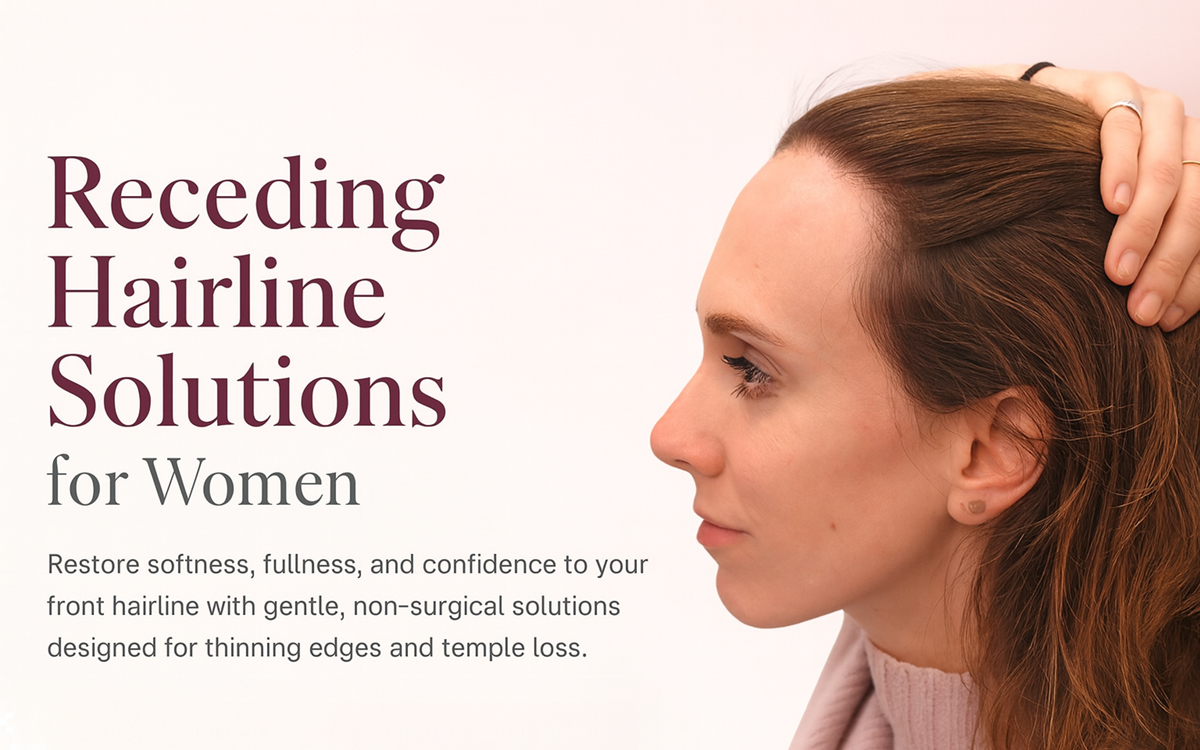
A receding hairline in women is more common than many realize. Whether you’re noticing thinning edges, weak temples, or a gradually moving hairline, the right solution can restore both your appearance and confidence. This guide covers the causes, treatments, and the most natural non-surgical fix available today.
What Is a Receding Hairline?
A receding hairline occurs when the front portion of the hairline gradually shifts backward. Women typically experience:
- Thinning edges
- Weak or broken temples
- Gaps near the front hairline
- Uneven or patchy frontal coverage
Unlike male pattern baldness, female hairline thinning is often linked to tension, stress, or hormonal changes — and can be improved or instantly camouflaged with the right solution.
Common Causes of Female Receding Hairlines
1. Tight Hairstyles (Traction Alopecia)
Ponytails, braids, buns, or wig/glue usage can pull on the edges, causing long-term thinning.
2. Bleaching & Heat Damage
Over-processing weakens fragile baby hairs around the hairline, causing breakage.
3. Hormonal Changes
Postpartum shedding, perimenopause, or thyroid imbalance can significantly thin the frontal area.
4. Stress & Lifestyle
Chronic stress slows hair growth by elevating cortisol.
5. Frontal Fibrosing Alopecia (FFA)
A medical condition causing scarring hair loss along the frontal hairline.
Who Is This Guide For?
This page is designed for women who are experiencing:
- Receding hairline
- Weak or thinning edges
- Temple thinning
- Early-stage hairline loss
- Damage from bleaching or tight hairstyles
- FFA or traction alopecia
Real Before & After Transformations
Instant confidence. Undetectable results. Zero damage.
The Best Non-Surgical Fix: Hairline Topper™
Most products focus on the crown — but your concern is the front hairline. Hairline Topper™ by Avy Hair is designed specifically for:
- Receding front hairline
- Weak temples
- Thinning edges
- Damage from bleaching or ponytails
- Early-stage FFA
Why It Works So Naturally
- Ultra-thin full lace melts into the skin
- Clipless / Halo Wire = zero tension, zero pulling
- 100% human hair blends seamlessly
- 10.5" × 1.75" hairline size matches natural proportions
- Instant transformation (5 seconds)
- Undetectable even under bright light
Other Solutions Women Try (Pros & Cons)
1. Minoxidil (Rogaine)
- May improve regrowth but takes months
- Requires daily use
2. PRP Therapy
- Expensive
- Mixed results for temples
3. Hair Transplant
- Effective but costly
- Long recovery
- Requires donor hair
4. Hair Fibers
- Quick fix
- Not sweat-proof
- Temporary
5. Hairline Topper (Instant Solution)
- Most natural non-surgical fix
- Reusable
- No damage or chemicals
How to Choose the Right Hairline Topper
1. Choose Your Length
Choose 10" or 14" depending on your natural hair and styling preference.
2. Choose Your Color
Use our Free Color Match service for perfect blending.
3. Choose Your Coverage Area
- Standard 10.5" × 1.75"
- Full lace options
- Clipless options for sensitive edges
Frequently Asked Questions
Is a Hairline Topper safe for thin edges?
Yes. The clipless Halo Wire design eliminates pulling and tension.
Will anyone notice it?
No. Ultra-thin Swiss lace melts into the skin, even under bright light.
Can I style it?
Yes — it’s 100% human hair. You can curl, straighten, or wash it.
Does it help with FFA?
It offers gentle, non-damaging coverage for early-stage FFA.


