
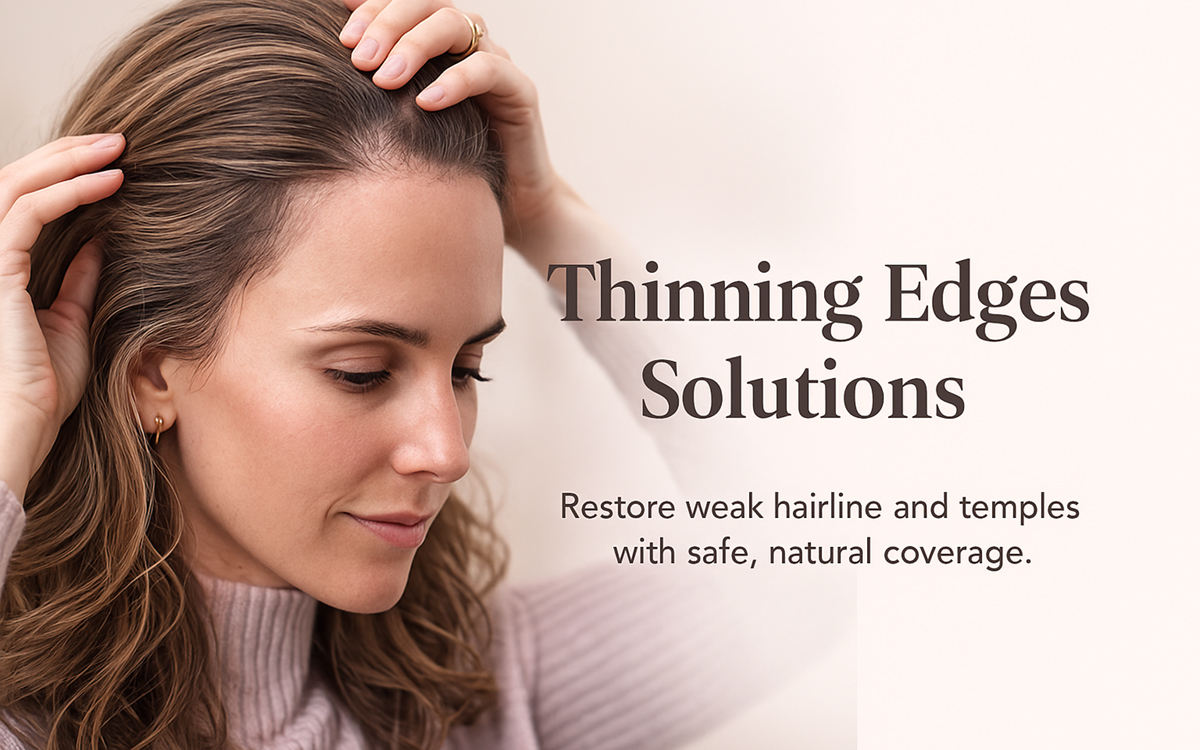
Understand the causes, early signs, and the most natural ways to restore fullness to your edges and temples — without damage, glue, or heavy wigs.
What Are Thinning Edges?
Thinning edges refer to hair loss or reduced density along the hairline and temples — one of the most common patterns of female hair thinning. Edges are extremely delicate because the hair is finer, shorter, and more exposed to friction, tension, and styling damage.
While thinning edges can happen gradually, they often become noticeable suddenly when pulling your hair back, taking photos, or styling your baby hairs.
Early Signs of Thinning Edges
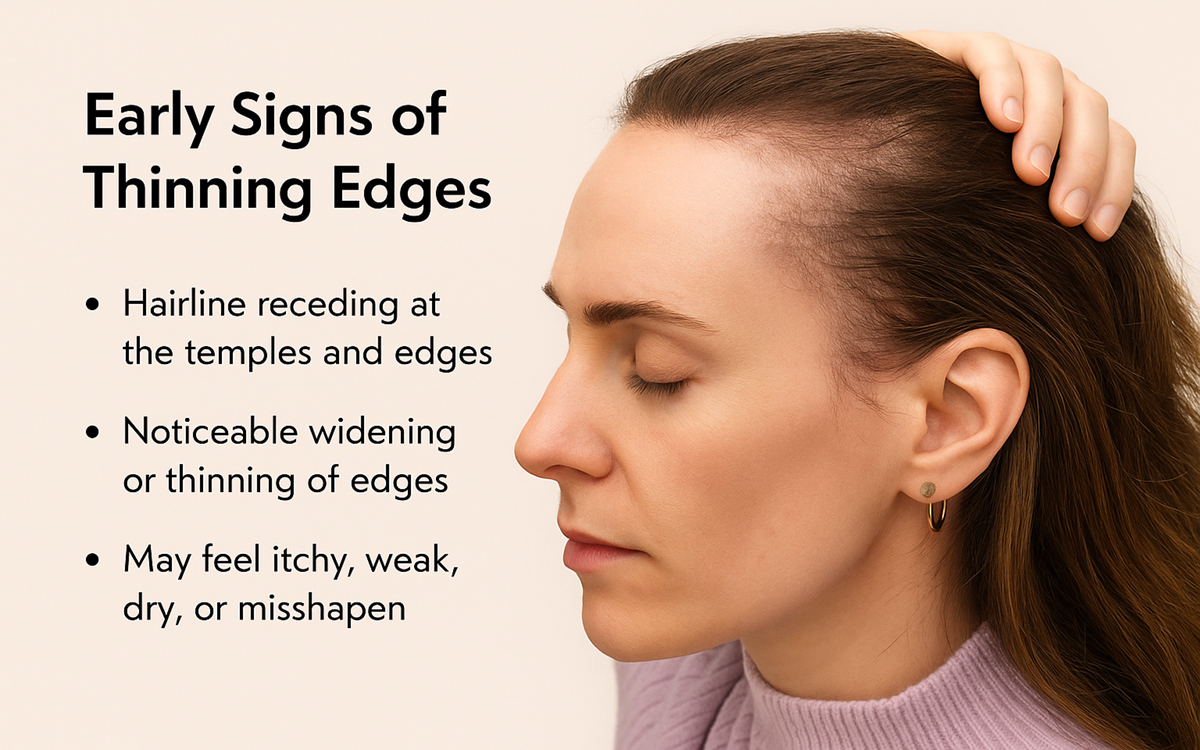
- Visible scalp around the temples
- Uneven hairline shape or fading baby hairs
- Thin, weak, or broken strands near the front
- Difficulty blending hairstyles that expose the hairline
- Receding U-shape or M-shape along the edges
Catching these signs early can prevent long-term damage and permanent hair loss.
Common Causes of Thinning Edges
1. Tight Hairstyles & Traction Alopecia
Braids, ponytails, wigs, or extensions that pull the hairline cause tension, leading to traction alopecia — one of the top causes of thinning edges.
2. Heat Damage & Hot Tools
Repeated flat-ironing or hot combing at the edges weakens the hair shaft and causes breakage.
3. Bleach or Chemical Overprocessing
Bleaching, coloring, or perming near the temples can cause severe hair breakage due to the fragile texture of edge hairs.
4. Lace Wig Adhesives
Glue, gel, and repeated removal can pull out fine hairs and damage the hairline.
5. Hormonal or Postpartum Changes
Pregnancy, menopause, stress, and hormonal imbalance can cause temporary or long-term thinning.
Non-Damaging Solutions for Thinning Edges
Before considering harsh treatments or invasive options, these gentle, effective solutions can help restore the appearance of fullness along your edges.
1. Reduce Tension & Avoid Tight Styles
Switch to loose styles, avoid pulling hair backward, and reduce pressure from wigs and extensions.
2. Limit Heat & Chemical Exposure
Use heat sparingly and avoid bleaching or coloring directly at the edges.
3. Improve Scalp Care
Gentle massages, nourishing oils, and consistent hydration can support growth.
4. Use Protective Alternatives
Rather than covering your entire head with a wig, a targeted front hairpiece provides natural, breathable coverage without adding weight or tension to your edges.
Why a Hairline Topper Works for Thinning Edges
A Hairline Topper is the most effective non-damaging option to instantly cover thinning edges and weak temples while protecting your natural hair. Unlike wigs, it:
- Covers only the edges — not your whole head
- Is ultra-lightweight and breathable
- Uses tension-free string or clipless halo systems
- Blends seamlessly with your natural hairline
- Increases the appearance of fullness instantly
For best results, explore our Hairline Topper options:
Front Hairpiece for Thinning Edges
Hairline Topper with String
Shop All Hairline Toppers
Thinning Edges FAQs
Can thinning edges grow back?
In many cases, yes — especially if caused by tension, heat, or postpartum shedding. However, long-term traction or scarring may limit regrowth.
Is a Hairline Topper safe for weak edges?
Yes. Our toppers use clipless or string-based systems with zero pulling tension, making them ideal for fragile hairlines.
Will people notice I’m wearing it?
No. Ultra-thin Swiss lace melts into the skin and blends naturally with your own hair, even at close distance.
Can I style it like my own hair?
Yes — all our toppers use 100% human hair, suitable for heat styling and daily wear.
How do I choose the right color?
Use our Free Color Match service by uploading a photo in natural light.