
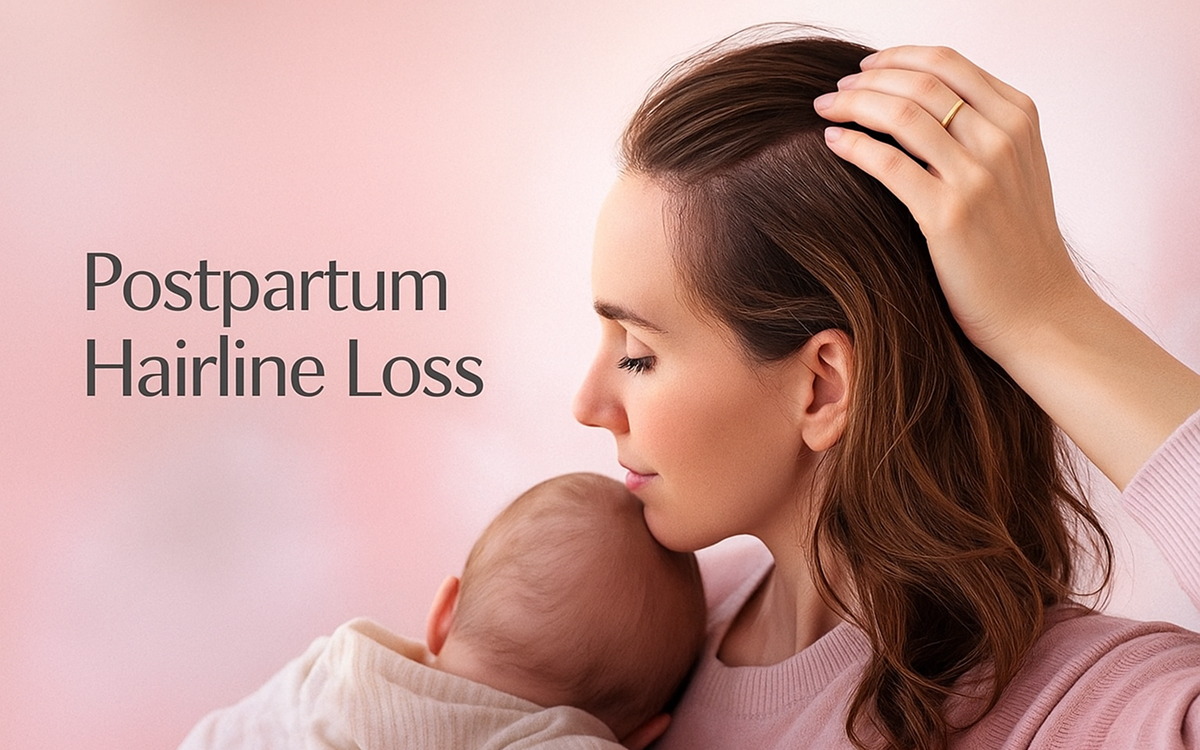
If your hairline suddenly started thinning a few months after giving birth, you are not alone. Postpartum shedding — especially along the temples — is one of the most common and emotionally frustrating changes new mothers experience. And yes, it can feel scary, unexpected, or even unfair.
Many moms describe postpartum hairline loss as “the one thing nobody warned me about.” You’re exhausted, hormonal, and adjusting to life with a newborn — and then, suddenly, your edges begin thinning faster than you can process it.
The good news: postpartum hairline loss is normal, temporary for most women, and absolutely nothing to feel ashamed of. Your body is healing. Your hormones are shifting. And your hairline is simply reacting to all of it.
In this guide, we’ll walk through:
- Why postpartum hairline loss happens
- What the timeline usually looks like
- How to support regrowth naturally
- What to do if the thinning becomes severe
- Gentle, non-damaging ways to cover the hairline during recovery
If you are also experiencing thinning at the temples, visit Thinning Edges Solutions.
Contents
1. Why Postpartum Hairline Loss Happens
During pregnancy, estrogen levels rise dramatically. This keeps your hair in the “growth phase” longer — which is why many women feel their hair becomes thicker and shinier.
After birth, estrogen drops suddenly. It's like your hair receives a mass signal: “Time to shed everything we held onto for nine months.”
The front hairline and temples are usually the first to react. Why?
- The fine, delicate hairs around your edges are naturally more fragile
- Stress, sleepless nights, and nutritional deficiencies can amplify shedding
- Ponytails, messy buns, and carrying your baby can cause friction around the temples
This is not your fault. It’s simply biology mixed with the physical realities of early motherhood.
2. What the Timeline Usually Looks Like
Postpartum hair shedding typically follows this pattern:
- 2–4 months postpartum: noticeable shedding begins
- 4–6 months: the most intense phase (many moms notice receding temples)
- 6–12 months: shedding slows, baby hairs start growing back
- 12–18 months: most women see full recovery — but not always
Some moms experience prolonged thinning at the edges, especially if:
- they have naturally fine hair
- thyroid hormones shifted postpartum
- they wear tight ponytails or buns often
- they had pre-existing edge thinning before pregnancy
3. What Postpartum Hairline Loss Looks Like
Most moms describe it as:
- thinning at both temples
- a widened hairline
- a “V-shaped” recession at the front
- short, uneven baby hairs that won’t blend
It can change how you style your hair. Many moms avoid pulling their hair back, taking photos, or wearing their usual hairstyles.
This emotional impact is real — and completely valid.
4. How to Support Regrowth Naturally
While you can’t completely “stop” postpartum shedding, you can support a healthier regrowth cycle.
✔ Be extremely gentle with your edges
No tight ponytails, no strong brushing, no friction.
✔ Prioritize nutrition
Iron, zinc, protein, vitamin D, and omega-3s support hair recovery.
✔ Reduce heat styling
Heat breaks fragile postpartum baby hairs easily.
✔ Keep the scalp clean and hydrated
Gentle wash routine helps. See How to Wash & Care for a Topper if you are wearing one.
✔ Give it time
Postpartum hair recovery is slow — and your body deserves grace.
5. What If the Thinning Is Severe?
If your hairline is not improving after 12 months, you may be dealing with:
- postpartum thyroid changes
- nutrient deficiencies
- PCOS or underlying hormonal imbalance
- traction alopecia from tight hairstyles
Bloodwork can help rule out hormonal or thyroid-related causes.
Many moms also choose non-damaging coverage during this recovery period.
6. How to Cover Postpartum Hairline Loss (Non-Damaging)
If your hairline feels too thin to style the way you want, a gentle, clipless solution can make a huge difference.
A Hairline Topper is especially helpful postpartum because:
- it uses no glue, no clips (safe for fragile edges)
- it blends with your natural hair
- it restores a natural-looking front instantly
- it allows you to wear ponytails, buns, and photos again
If you want personalized color selection, you can request a Free Color Match.
You deserve to feel confident in this season — not hidden.